Would you write a speaking part for me?
On queer community and the Vibe

I. The City1
Fourteen years ago I lived above a nightclub inside the ancient walls of a German city. The city hasn’t had to shelter a fleeing Pope from encroaching Roman armies since the 8th century, so the walls are mostly decorative at this point, but the city maintains them regardless. You never know when a Pope might need a place to crash. To go out into the part of the city that has been called the “new town” for close to a thousand years, I had to pass through one of the five gates. They’re paved intersections now, but they still have their old names.
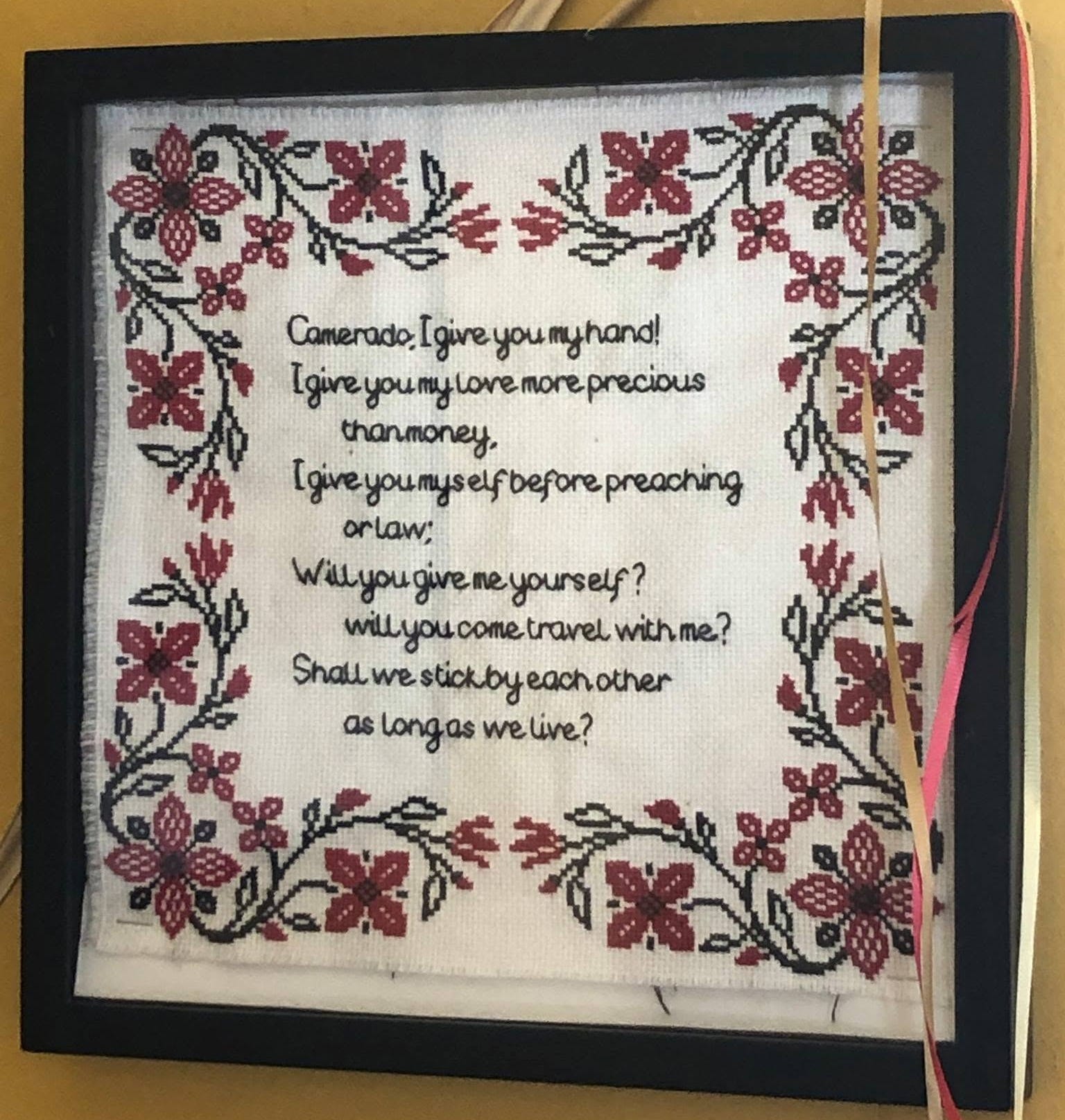
Every day on my way home from university, I checked the mail at the bottom of the stairs to my apartment. If there was a letter from my girlfriend in the mailbox, I swerved back out onto the street as though electrically propelled. Sometimes I’d walk a mile or more before I opened it, following the neat sidewalk just inside the old walls, seeking just the right place. Somewhere private, somewhere no one might guess what I was doing—but not too private, because I needed the eyes of other people to keep me pinned to the earth.
I used to do this kind of thing a lot before I came out. I was always inching toward it without taking my eyes off the exits. I’d come out to a stranger if I could be assured I’d never see them again in my life, but never any of the relatives who hosted me for Christmas and Easter. I’d skitter backward from anyone who seemed to me too obviously gay, for fear any ambiguity in my own behavior would cease to cut in my favor if I got too close, but I’d cling to those who hid it better, who seemed to me to be radiating the same fear I was. Once it snowed in that town, big chunky flakes sprinting past the window all night, and in the early morning the cobblestones sat four pristine inches deep. I found a blank canvas in a courtyard by the cathedral and stamped our initials into the snow, each letter five feet tall. Then I stood and stared at them with my heart running wild, wondering if anyone would suspect who had done this—if there was some tell I couldn’t see that revealed me—if I was tempting the gods with these little flashes of imagined spine.
Often I sat down with her letters on the steps of city hall, first established on that spot in the thirteenth century. The cathedral plaza was always full of people doing the same things they’d been doing there in the year 1280, eating and drinking and talking and meandering. Under the plaza was a crypt containing the bones of a 4th-century saint and the source of a clear, cold spring that fed a short, cold river.
Rituals of love are still enacted there. Once on my way across the plaza I passed a gang of drunk, laughing people on the steps of city hall, egging on a young man on his knees sweeping up armfuls of spilled bottlecaps from the cobblestones. A tradition, my roommate told me, rolling her eyes, to guarantee a man too long single a wife in the coming year. His friends collected bottlecaps to scatter, in the hope a willing woman might bend down to help him gather them.
I thought, sitting on the steps with the bones of Saint Liborius moldering somewhere underneath me, that there must have been others who read letters from women they loved here. Maybe some of them had even been women. Were you not still the woman they all knew, sitting on public steps that no one needed a reason to occupy? Were you not still a part of everything, even though you loved her?
I wrote my girlfriend long letters sitting at the desk in my apartment by candlelight, while the oontz oontz of the dance floor below came up through the floor. On a busy night you could almost smell the sweat of drunk British servicemen through the vents. I wrote her long emails from my phone, too, crouching in the corridors of packed cross-country trains on a cheap student ticket. We kept two orbits of conversation revolving at the same time, at different speeds, for that whole year. I kept all my letters from her in a box under my bed.
II. The Vibe
There’s a joke I hear a lot that goes like this: Bisexual people can’t sit correctly in chairs.
This is an Internet joke of a particular era that has somehow thrived into the modern age. I have heard this joke, no exaggeration, hundreds of times. Sometimes I’m caught up short, walking around the world, talking to my coworkers, exchanging pleasantries with acquaintances in the grocery store: Do they know? About bisexuals and sitting in chairs wrong? Have they gone through their whole lives never hearing anyone make that joke even once?
It has staying power because it’s useful. A woman who is coming out as bisexual on social media can diffuse any potential tension with it, while making clear that the queer lingo is already known to her: I’ve realized I’m attracted to women. And now you all know why I’ve never been able to sit right in a chair. One who notices a declared bisexual sitting incorrectly in a chair can point it out to the sympathetic group at large, closing the circle in the ritual of queer visibility: Look! She’s doing it again! Even better when it can quietly affirm two or more at once, eyes meeting across the table or between couch and armchair: Look! We’re doing it again!
These days, demonstrating to others that you are in and of the queer community means knowing the jokes of this kind. There are so, so many. Gay people can’t do math is a joke about as old as bisexuals-in-chairs, which gives one the opportunity to note one’s identity aloud in public whenever asked to calculate a tip. Not a month goes by that someone does not report to me that I am giving cottagecore lesbian. GAY AND ANXIOUS says the barista’s t-shirt in neon bubble font. Tell me you were a queer child without telling me you were a queer child, reads a post under a picture of a kid holding a wildly popular children’s book from the 90s.
Over time the jokes have melted outward into a big, sloppy, fuzzy-edged vibe, a sludge of jokes that are only tenuously jokes and more something at the center of the Venn diagram between “shitpost,” “identity,” and “lifestyle.” It’s recursive: Anything can be queer if you’re queer and you like it; therefore, liking things you like affirms you’re queer. Sitting in chairs wrong is queer. Playing Dungeons & Dragons™ is queer. Keeping houseplants is queer. Board games are queer. Fidgeting with the pieces during board games is queer. Foraging is queer. Mushrooms are queer. Art is queer. These shoes are queer. This haircut is queer. Showing up late is queer. Not being able to drive is queer. Wearing button-up shirts is queer. Wearing crop tops is queer. Makeup is queer. Crystals are queer. Herbs are queer. Astrology is queer. Witchcraft is queer. Anxiety is queer. Depression is queer. ADHD is queer. Star Wars is queer. Having queer friends is queer.
The vibe is too gelatinous, too bland and malleable, to contradict. Questioning any individual part of it—what’s queer about sitting wrong in a chair?—is easily rebutted—Well, no one’s saying there’s actually anything queer about sitting wrong in a chair. Moreover, this would be a ridiculous question to ask, missing the point of the exchange by a wide mile.
The vibe’s primary function is as social shorthand. The vibe functions to resolve ambiguity without committing the sin of asking a direct question. It is necessary because the great fear nowadays, in places where the vibe is ascendant, is that one’s queer identity should be invisible.
There are many circumstances where invisibility is a risk: Bisexual women who first came out while in monogamous heterosexual relationships, people with trans partners whose pronouns might obscure the underlying queerness of the arrangement, people with romantic and sexual and gender identities that don’t revolve around desired partnership at all. And, of course, there’s the Internet, where you are only what you declare and a crowd is ready to exclude you on no evidence at any moment. You can’t just not declare yourself. You need a common dialect through which people can announce their inclusion in the club, establish their right to their opinions, and open themselves to the etiquette of mutual affirmation.
It’s a strange mirror of the past. In-group language used to be a way people who couldn’t declare themselves in public signaled to each other, a backroom register to switch into only when it was safe. Friends of Dorothy, women in sensible shoes, that kind of thing. This haircut is queer, this cut of trousers is queer, this bar is queer, this carefully-curated set of tastes is queer, this lingering look at your mouth is queer. If you knew, you knew, but nobody else knew.
The vibe, on the other hand, requires outside eyes. It is equally important that other queer people know you are one of them, and that an imagined crowd of straight people know you are not. One does not switch out of this code.
Because of its expansiveness, the vibe is especially kind to the inexperienced and insecure. To know the in-jokes, to like the correct things in the correct way, is to enjoy full participation in the community, and the supply of jokes and memes and signals with which one can establish queer cred is rapidly approaching infinity. In a social world where everyone is simultaneously grasping for validation and scrutinizing each other’s bona fides, the vibe always offers a soft landing.
I get where the anxiety comes from. I’ve been there. It’s hard to walk into a world with so many rules when all you want is some sense of belonging you didn’t have to beg for. When I came out, no motherly butch emerged to take me under her wing and introduce me to my assigned team of lesbian mentors. I didn’t get a queer community. I had to scrape validation out of the carpet hairs with a putty knife, if I wanted it. For years, gay people who seemed to know how to be gay scared the shit out of me, and women who expected me to know what I was doing even more.
The queer community abhors a gatekeeper, so don’t worry: I’m as out-of-place and awkward among the gay old guard as I am surrounded by my queer peers. I don’t understand their slang, their cultural references, any more than I understand the ones that are supposed to belong to me. At least the old guard sometimes also have wives, or aspire to wives, and generally that suffices; a wife, and a memory of a time when we were more afraid than we are now. That’s all I’ve got to offer anyone in terms of common ground.
The vibe spreads outward, warm and cloying. The vibe is sweet and soft. The vibe loves cartoon animals and cartoon women. The vibe looks good on t-shirts, on water bottles, on laptop stickers, on shelves, on altars, on Instagram. The vibe is visible. The vibe resists resistance. The vibe must be affirmed, and affirmed, and affirmed.
III. A Memory
In the summer of 2016 my girlfriend and I drove four hours south from Chicago, seeking womyn’s land. Spelled like that. A couple of lesbians were hosting a music festival on their farm, and a folk singer we liked who never toured the Midwest was performing. Cheap opportunities to get out of town were thin on the ground in those days, so we bought our $40 weekend tickets, loaded up our tent, poured vodka into several large bottles of lemonade, and went to go sleep in a cow pasture for fun.
The music was largely very bad, in the most earnest way possible. Certain performances required a lot of vodka lemonade to get through. Still, it was a good crowd—the cheers were all warm and genuine. In between performances, guests hosted guided meditation sessions, contemplated the divine feminine, and led therapeutic plate-smashing exercises. Meals were communal, and all guests were expected to do chores. The attendees were equal parts wispy middle-aged Wiccans and square-jawed beer-guzzling Midwest dykes, plus one or two men who clung, cryptid-like, to the outer perimeter. They received a benevolent welcome but had shown up mainly to provide childcare while their wives returned to a fold in which they had, perhaps, once enjoyed fuller membership. The evening bonfire dances ended with pairs of women sitting around, drunk or stoned, leaning into each other’s shoulders and grinning dazedly at the wild river of stars overhead.
My girlfriend and I had moved in together in 2014. We’d been long-distance for a couple of years before that—I’d moved to Germany already in love with her, but unwilling to come clean just to fuck off for a year. I’d figured my obsession would peter out once I’d had a European fling, gotten to try out being gay 5,000 miles from anyone who could ruin my life over it. Maybe I’d even kiss my way out of the miserable terror I foisted on every woman who’d ever hoped for intimacy with me and come back a better woman somehow.
I did manage a little kissing, in between writing her long letters and emailing her photos and video calling her and buying her presents, but three months into my half-hearted European rumspringa I threw in the towel. We got together on opposite sides of midnight and have celebrated a two-day anniversary ever since.
I knew in the summer of 2016 that I never wanted to be with anyone else. The thought of an apartment that didn’t have her in it, an errand that didn’t involve her, a bed we didn’t share, had become unthinkable the day we moved in together. Two years long distance felt simple enough while it was happening and utterly impossible in hindsight. We’d already fumbled our way into a promise to get married back in 2015, a blurted proposal made under the influence of wine and the right Anaïs Mitchell song at the right time, but I didn’t know what was supposed to happen next, what marriage could possibly add to the fact of our union. I’d never really known any women who got married.
There were a lot of older couples on womyn’s land. I couldn’t stop watching them. Old fat women sat next to each other on lawn chairs, clapping along with whatever over-sincere folk song, holding hands in between sets. One night we heard a fierce argument from the tent next door, and the next day witnessed the tearful apology. On the last day of the festival, the emcee used her microphone privileges to propose to her girlfriend of more than a decade and I sobbed for joy.
I have chosen, until now, to allow what happened on womyn’s land to stay on womyn’s land. I feel protective of these memories. I’d been in the world long enough even then to know that these people are easily mocked. The sign at the gate to the pasture that said womyn’s land was itself a punchline I’d heard many times before. The invocations of the Goddess, the bad lyrics, the braless tits flopping around under T-shirts with farmer’s market logos on them, all of these things were jokes that people told to separate themselves from women like that. To straight people it smacked of Portlandia; to the young queer people I knew it was half-cringe, half-something more sinister, something associated with something else that perhaps was not fully inclusive. Either way, I did myself no favors longing for it.
At night I lay in the tent beside my girlfriend, smelling woodsmoke, vodka lemonade sweet on my tongue, and fantasized about what we would look like when we were old. Which of my grandmothers would I look more like? How would she go gray? The thought made me giddy. That day I’d met a pair of women who’d been together thirty years—longer, then, than I’d been alive. I prayed to God that someday I would be so old, so beautiful, so free, and that my girlfriend would still love me.
IV. A Review
Somehow it took me until 2026 to watch The Notebook (2004, dir. Nick Cassavetes). This is kind of amazing, a fact that without context suggests I never met a woman until I was thirty-five. The film is so deeply ingrained in the culture of my upbringing that when I finally watched it, I kept finding myself remembering lines before they happened despite never having seen it before.
Maybe that was the problem—the culture of my upbringing. My understanding of The Notebook was of a product made for suburban girls to cry about during movie night with their moms, the raciest film permitted to the kinds of teenagers who wore promise rings and still danced exclusively with their fathers at age 16. I considered myself above this sort of thing during the years of its greatest popularity.
My wife and I have been making our way through the collected filmography of Ryan Gosling, so watching The Notebook was homework. If we were to love Ryan Gosling in his Project Hail Mary maturity, we must also learn to love his smoldering babyface, to understand the film that set afire the panties of every Christian mom in my north Georgia suburb.
The Notebook, based on the Nicholas Sparks novel of the same name, tells the love story of star-crossed soulmates Nick Calhoun and Allie Hamilton, played by Ryan Gosling and Rachel McAdams. Throughout the film an elderly man reads their story aloud from the titular notebook to a woman with advanced dementia, narrating in voiceover taken directly from the novel. Allie is old-money wealthy, sweeping in for a summer vacation by the South Carolina coast before she goes off to the private college her parents have selected for her; Nick works in a lumber mill and spends his free time dancing to old-timey fiddle music with the other poors and reading Walt Whitman aloud on the front porch. Their worlds collide at the county fair, where Nick catches sight of Allie, falls immediately in love with her, and hangs himself off the top of a Ferris wheel (It’s 1940, you could do that kind of thing back then) until she agrees to a date. One date is all it takes for them to realize they were made for each other.
There are, of course, problems. Nick is too poor for Allie’s mother (played with perfect southern villainy by Joan Allen), who conspires to keep them from staying in touch; Nick must go to war, during which time Allie gets engaged to a cotton baron. Nick dedicates his heartbroken life to single-handedly repairing the massive, abandoned plantation house where they almost had sex once, and Allie, drawn inexorably back into his arms by the news that he has fulfilled this impossible promise, must decide what she truly wants from her future.
I mean, we know what she wants. Sitting on top of it all there’s the lugubrious framing story in the old folks’ home, which puts little effort into concealing that the elderly couple are Nick and Allie. There wouldn’t be a framing device if they hadn’t been together for all of the intervening time. But no viewer could possibly believe Allie wasn’t going to choose Nick in either case—it’s simply not that kind of movie—so this criticism is only so meaningful.
On balance, this is a bad movie. Sparks’ dull, ponderous prose makes up an excruciating proportion of the script. The pacing is utterly wrecked by the need to keep cutting back to the frame, where the acting takes a consistent nosedive—not because the actors (Gena Rowlands and James Garner) are doing anything wrong, but because they cannot deliver the words of the script while sounding like human beings. The two don’t even bear any real resemblance, as characters, to their younger selves. For example, Nick explains to his doctor his belief that if he just reads the notebook aloud enough times, God will give back Allie’s memories of their relationship, science be damned. Sure, we’re missing the middle 50 years of their relationship, I suppose a lot could have happened in that time, but we get no indication anywhere else in the film that Nick believes on the power of the LORD to grant miracles, or even that he believes in God at all.
In the framing story the glurgy emotional manipulation becomes impossible to look past. In one particularly bad scene, elderly Nick introduces elderly Allie to their children, who she does not remember at all. (This is the big reveal of their identities for those viewers who, I guess, got up to pee every single other time it cut back to the nursing home.) As she shuffles offscreen, their kids beg Nick to come home, to be part of their lives again—his time left on Earth is short, too. He doesn’t really think he can bring their mom back by reading from the notebook, does he? But he does. And he’s right. And that’s love.
I cannot, however, write off The Notebook for these crimes. I understand now what every girl in my high school loved about it, what scorched those Christian panties. The fact of the matter is that every second Ryan Gosling and Rachel McAdams are onscreen together, their chemistry could power a city. By the end of their opening scene, when Allie yanks down Nick’s trousers as revenge for his audacity while he dangles from the Ferris wheel, I already believed they should be kissing.
All of their scenes together are a cut above the rest. The filmmaking seems to slow down to accommodate their acting, lingering on their conversations for stretches that would be tedious if not for the sense that all of the words being spoken are mere formalities, the excuse they need to stay within touching distance of each other as long as possible. Every second they’re not touching each other, you wish they were as fervently as they do.
My wife and I joked about Baptist moms and PG-13 ratings at the beginning of our watch, but shut up when the two teenagers took off their clothes for the first time together. By this point in the film, this feels inevitable as death. They stand five feet apart on the blanket they’ve thrown down on the rotten plantation floor, agreeing through glances alone to take turns shedding garments. We only ever see them nude from the collarbones up, but the camera shows us Allie’s face as Nick takes off his underwear. McAdams’ expression is perfect—a little cut of the eyes up and down his naked body, a quick and imperfect mastering of herself. She’s a girl intrigued and hungry and trying desperately to keep her cool, who yearns for this but fears what it means to step over this threshold. In the end her uncertainty will prevent the consummation of this encounter, and they’ll be too star-crossed to come back together after this night.
Much later, when Nick and Allie reunite in their twenties and finally fall into bed together, the camera focuses again on Allie’s face, this time at the moment of climax. Again, we see nothing below the collarbones (framed, exquisitely, by her pearl necklace), but we’re entirely with her in this moment of ultimate fulfillment, this unlooked-for second chance. The stupid framing device didn’t need to hit us over the head with this. We understand without a doubt the answer to the question that Nick will soon ask her: What do you want?
In both scenes, the way the camera closes in on one face at a time heightens the vulnerability and trust between them. It feels more intimate than showing their naked bodies would be. And it feels wonderfully true, as a fantasy. I remember what being a teenager was like. I remember the first time I kissed someone I really, really wanted to see naked, the way my feelings felt bigger than my body, bigger than the world. It’s effortless to root for the young Nick and Allie. Maybe I should have watched The Notebook as a 16-year-old, when I was reeling through my own first wild secret love affair, dodging my parents’ disapproval, convinced I’d invented both love and oppression. I think I would have seen more of myself than I expected.
V. Yearning
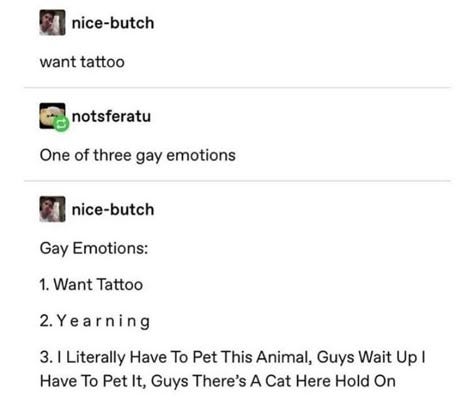
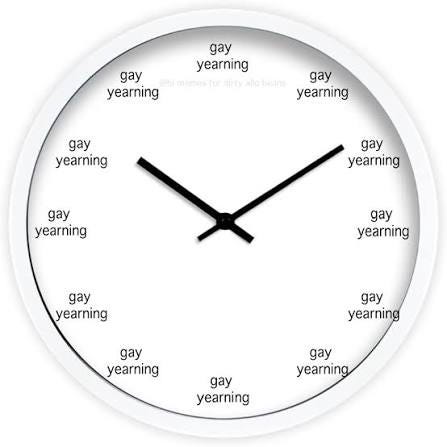
Did you know yearning is gay?
I mean, no one’s actually saying yearning is gay. Everybody knows there’s nothing especially gay about yearning. But there is a special thing called gay yearning. Straight people don’t do it, but if you’re gay you do it all the time. Gay guys on TV do it at each other and it’s hot—they’re especially good at it, in fact. They can yearn while they’re already fucking. Gay women do it more poetically, at a respectful distance. There are lots of memes about it:
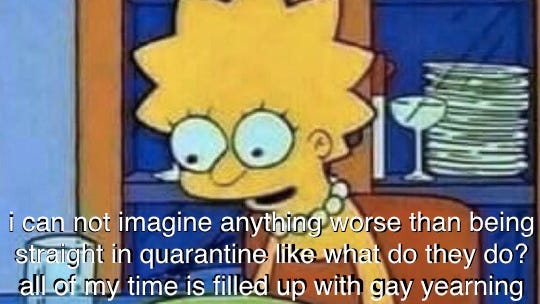
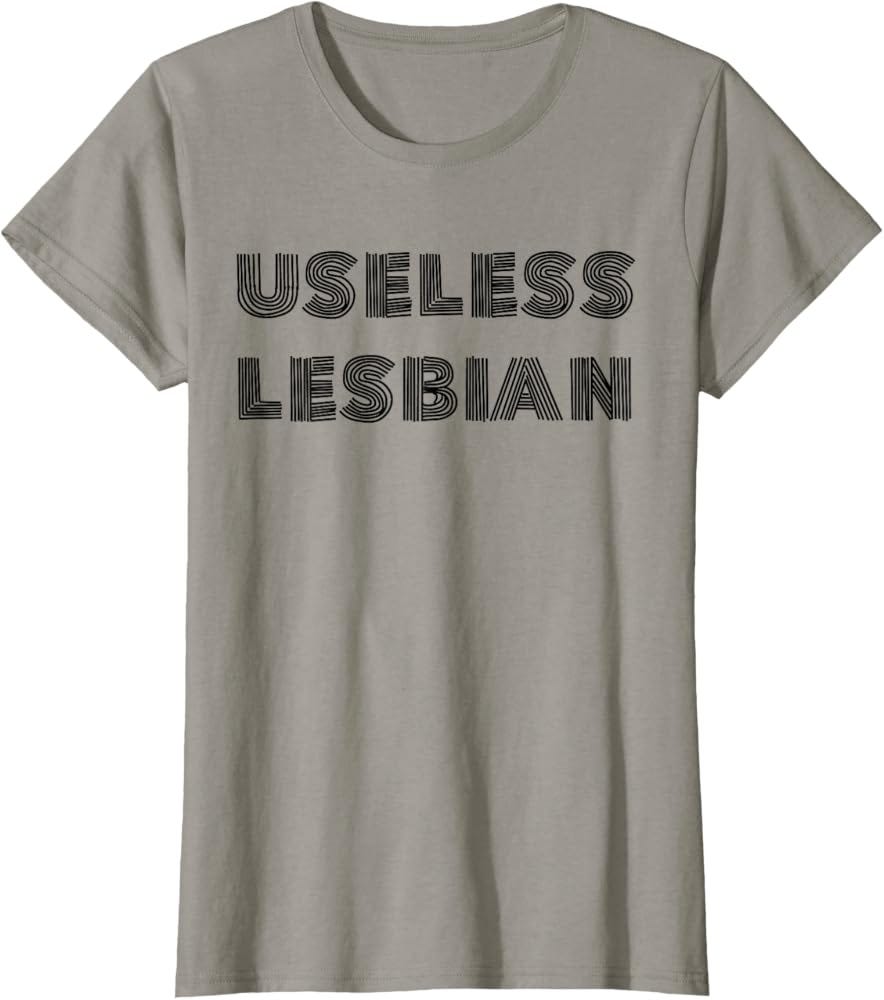
Sometimes there is overlap between gay yearning and the state of being a useless lesbian, a woman who is bad at telling when other women are showing romantic interest in her. Look, here’s a T-shirt:
Look, I know I’m a buzzkill.
I’m always tender coming off the end of Pride, which is a month now—a fucking month—and which has at this point been utterly subsumed by the vibe. I have this condition where I’m pretty sure I can experience what the kids call queer joy all day long, but the minute anybody calls it queer joy in my hearing I swerve immediately to queer loathing, no stops. If anyone ever describes me as resilient to my face the demon inside me will pick them up and break them over my knee.
Forgive me my judgment, my pretentiousness. That was gay culture too, once, wasn’t it?
Listen: I want to be with and among those who understand my life. But the dialect of trite, unending affirmation erases both parties to the transaction. It absorbs us all into the gooey pastel cloud, it grinds away our best edges, it turns the strangeness and beauty of individual queer lives into so many lame t-shirt slogans. It demands we stand outside ourselves watching ourselves. It turns us into anxious little parrots. It’s all so unspeakably boring.
I am sick of wading through this miasma of cutesy memes and passing these stupid little validating phrases hand-to-hand. I don’t want community to mean reciting the same goddamn Tumblr posts back and forth forever. I want truth to be, sometimes, unobserved and unspoken. I don’t want to constantly have to reassure insecure people that we have something important in common. Maybe we don’t have anything in common. Who cares? Get a wife, if it matters so much to you.
VI. The Ruins
On New Year’s Day fourteen years ago, my girlfriend told me I love you – a piece of a sound recording in my email inbox to find when I woke up nine hours ahead of her. The day after, I crossed out of the city walls by foot in the morning twilight and took a 7:00 am train into the countryside. I hiked alone up into the hills in January fog.
There were ruins up there. In a clearing on top of a low hill were the crumbling walls of a tiny church and the four-foot-deep imprint of its cellar, overgrown with grass. The outlines of a few old Roman foundations were scattered around, some with spindly trees growing out of them. There were broken gravestones, long since faded to nothing.
Nothing roped the ruins off from the trail. Twenty minutes by train in either direction there were well-preserved castles, with docents and stained glass and suits of armor you could really put on. This hilltop barely merited anyone’s curiosity. There wasn’t even a placard to put the ruins into context, just an arrow pointing uphill at the trailhead: That way, if you insist.
I walked the damp trails through the mist for most of the morning. I met no one else. Everything around was muffled; the fog swallowed the sound of distant cars and the birds in the hedges were subdued. Every so often I stopped and listened to the recording again, holding my phone’s tiny speaker up to my ear.
Eventually I made every circle it was possible to make. I returned to the hilltop and sat on the wall of the ruined church alone, listened to the sound recording again, and felt heavy with fear.
I said I love you aloud into the fog, quietly, in case the trail wasn’t empty, in case someone was standing just out of sight. The sound hung flat in the air in front of me and warmed the inside of my chest as it left. I left it there and walked back down out of the hills, back onto the train, and back under the gate into the city walls.
Title comes from The Secret Seven, by Owen Pallett.
Oh Sarah, this was so beautiful and romantic in the best way. I have tears in my eyes. Your essay reminds me of John Berryman’s Sonnet 23, which my husband recited to me on one of our first dates:
They may, because I would not cloy your ear -
If ever these songs by other ears are heard -
With 'love'; suppose I loved you not, but blurred
Lust with strange images, warm, not quite sincere,
To switch a bedroom black. O mutineer
Wth me against these empty captains! gird
Your scorn again above all at this word
Pompous and vague on the stump of his career.
Also I fox 'heart', striking a modern breast
Hollow as a drum, and 'beauty' I taboo;
I want a verse fresh as a bubble breaks,
As little false . . . Blood of my sweet unrest
Runs all the same - I am in love with you -
Trapped in my rib-cage something throes and aches
This was gorgeous, Sarah. Thank you for sharing such beautiful and intimate moments in your life with us.